Every football season throws up a handful of sides that transform their stadium into a near-impenetrable fortress. Understanding which clubs are performing strongest on home soil — and why — gives any football follower a sharper lens through which to analyse upcoming fixtures. This piece looks at the patterns, statistics, and tactical factors behind standout home records so far this season.
Table of Contents
Why Home Form Matters in Football Analysis
Home advantage has always been a debated concept in football, but the numbers consistently tell a story. Across Europe’s major leagues, home sides historically win around 45–47% of all matches played, with draws accounting for roughly 26% and away victories around 27–29%.
However, these are aggregate figures. Individual clubs deviate significantly from those averages — and those deviations are where interesting analytical observations emerge.
When a club posts a home record of six wins, one draw, and zero defeats in eight matches, that is not noise. That is a pattern shaped by consistent factors: crowd support, familiar turf, reduced travel fatigue, and tactical setup specifically designed for home encounters.
Which Clubs Have Stood Out at Home This Season
Looking at the 2024/25 season across the Premier League and other major European leagues, several clubs have established themselves as particularly formidable in front of their own supporters.
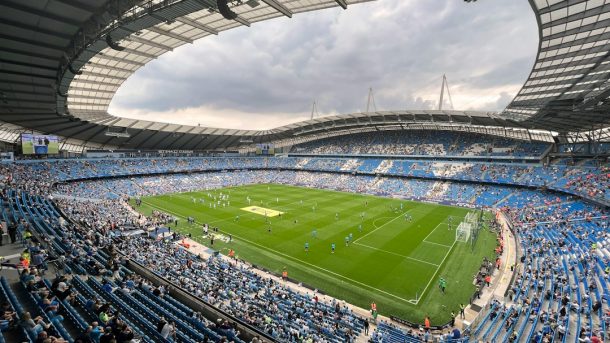
Manchester City at the Etihad
Despite a period of inconsistency away from home, Manchester City’s record at the Etihad has remained relatively solid. Pep Guardiola’s side typically control possession more dominantly at home, and opponents travelling to Manchester tend to set up defensively, which paradoxically creates space for City’s wide forwards and false nine movements.
Their home Over 2.5 goals conversion rate has hovered around 60–65% in recent seasons, which is a figure worth noting when examining the Over/Under market — explained simply as a market where the question is whether total match goals will exceed or fall below a set threshold, most commonly 2.5.
Real Madrid at the Bernabéu
Real Madrid’s Santiago Bernabéu remains one of the most statistically productive home venues in European football. In La Liga this season, Madrid have dropped minimal points at home, with a goal difference that reflects both the efficiency of their forward line and the organisational discipline of their defensive shape.
Carlo Ancelotti’s setup at home tends to be more expansive, allowing Vinícius Júnior and Rodrygo more freedom on the flanks. Their home clean sheet rate has been lower than expected for a title-contending side, but they compensate with a goal-scoring output that rarely falls below two per home match.
Atalanta in Serie A
One of the more fascinating home-form stories in European football this season has been Atalanta’s Gewiss Stadium. Under Gian Piero Gasperini, Atalanta play a high-energy, high-press system that is physically demanding to face. At home, where their supporters amplify that intensity, the numbers reflect it.
Atalanta’s home record in Serie A has included a consistent thread of multiple-goal matches, making their fixtures relevant for those examining the BTTS market — which stands for Both Teams to Score, a market simply asking whether both sides will find the net in a given match, regardless of the final outcome.
Tactical Patterns That Drive Strong Home Records
Across these clubs, certain tactical themes repeat themselves when analysing home superiority.
Pressing intensity increases at home. When a squad has its full, vocal fanbase behind them, pressing triggers earlier and sustain longer. This disrupts visiting teams’ build-up play and creates turnovers in dangerous areas.
Shape shifts to accommodate home confidence. Many of these managers slightly adjust their formation at home — deploying an additional attacking midfielder or pushing wing-backs higher — knowing that their own crowd creates a psychological buffer if an early goal is conceded.
Visiting sides sit deeper. Away managers almost universally set up more defensively against strong home sides, which creates central congestion but also exposes space behind their defensive line. Clubs like Manchester City and Atalanta specifically exploit that space with runners beyond the ball.
Set-piece efficiency climbs. Home teams are statistically more accurate from dead-ball situations, partly due to crowd noise affecting away goalkeepers’ communication with their defenders.
Reading Home Form Data for Fixture Analysis
When approaching a fixture involving a strong home side, several data points carry analytical weight.
First, examine the home side’s scoring consistency — not simply whether they score, but when they score. Early goals at home tend to compound the advantage, pushing away sides into more exposed positions sooner.
Second, consider the form of the visiting side away from home. A club with a poor away record — defined here as one win from six road fixtures — amplifies the statistical case for the home side’s data to be meaningful rather than circumstantial.
Third, look at goal timing patterns. Some sides score heavily in the second half at home when opposition legs tire and the crowd lifts the home players. Others, like City, tend to impose themselves early. This shapes analysis of markets like the Double Chance — a market that covers two of three possible outcomes simultaneously (for example, home win or draw, covering 1X) — or Half-Time/Full-Time markets.
Fourth, injuries and suspensions to key away players travelling to difficult venues historically have a larger impact than equivalent absences in home matches. Context around team news is essential before forming any opinion on a fixture.
Frequently Asked Questions
What does a strong home record actually tell us about a club?
It reflects consistency under familiar conditions — a product of tactical familiarity, crowd support, and the physical advantage of not travelling. It is one of the most stable indicators of a club’s overall competitive level across a season.
How is the Over/Under market defined in football?
It is a market that asks simply whether the total goals in a match will be above or below a specific number, most commonly 2.5 goals. It has no connection to which team scores or the final result.
Do away sides adjust their tactics when facing strong home teams?
Yes. Away managers almost always prioritise defensive structure when visiting high-performing home sides. This often results in fewer open chances for the away team and increases the likelihood of a compact, lower-scoring first half.
What is the Double Chance market in football?
Double Chance is a market that allows selection of two of the three possible outcomes — home win or draw, away win or draw, or home or away win — within a single market, reducing exposure to one outcome being correct.
Predictions are opinions based on analysis, and no result is guaranteed. This website is for adults aged 18+ and is for information and entertainment only.
Turn matchday into income — visit BetsIncome for football predictions built to grow your bankroll.
